Indigenous owned business
Supply Nation
Commonwealth target: 3.25 per cent of eligible procurements in 2026 to 2027, rising to 4 per cent by 2029 to 2030. Verification arrangements are changing in 2026 to 2027.
Accessibility settings
Adjust the site to suit you. Your choices are saved on this device.
Australia has certification bodies for Indigenous owned businesses, women owned businesses and social enterprises. There is no equivalent body for LGBTIQA+ owned businesses. Pride in Business publishes research and analysis on what this means for LGBTIQA+ business owners and the organisations that buy from them, beginning with a national research report on LGBTIQA+ business ownership.
The draft method is now public, and the advisory board will co design the final version. Read the framework.
Close on 6 December 2026. Volunteer and remunerated positions are available.
Sexual orientation and gender were asked on 11 August 2026. First results are due in June 2027.
Desk research and interviews, published free with its method and data.
Indigenous owned business
Supply Nation
Commonwealth target: 3.25 per cent of eligible procurements in 2026 to 2027, rising to 4 per cent by 2029 to 2030. Verification arrangements are changing in 2026 to 2027.
Social enterprise
Social Traders
No Commonwealth target. Members commit to spend and report it
Women owned business
WEConnect International
No Commonwealth target
LGBTIQA+ owned business
No Australian certifier
No Commonwealth target. What buyers recognise is the subject of our research
Sources: National Indigenous Australians Agency, Indigenous Procurement Policy, May 2026; Supply Nation; Social Traders; WEConnect International. Pages checked 19 September 2026. Whether Australian buyers recognise LGBTIQA+ ownership is the subject of our research and is not asserted here.
 Policy
The 2026 Census was the first to ask Australians about sexual orientation and gender, and its results will describe people who work in their own business by those characteristics. They will not provide a count of LGBTIQA+ owned enterprises, which would require a separate survey that no organisation has yet committed to build.
 Procurement
This analysis compares the mechanisms behind Australia’s supplier diversity categories and finds that recognising a supplier category is separate from using it, so research on LGBTIQA+ suppliers needs to examine both recognition and purchasing.
 Procurement
Social Traders reported 304 million dollars in member spending with certified social enterprises in the 2025 financial year, the highest annual total on record. This analysis sets out what the figures show about the market and why they cannot show how much reaches LGBTIQA+ owned businesses.
 Corporate Pride
Commentary on the retreat from visible corporate Pride has focused on sponsorship and marketing. This analysis looks at the procurement side of the relationship and finds that, on the public evidence, it was never built at scale.
 Policy
The State of LGBTQ+ Business in Australia starts in March 2027, and members of the LGBTIQA+ Advisory Board are being recruited now so that they can test its method while it is still in draft. The board’s role, funding, terms and application process are set out below.
This is the central question of the research, which will scan the published supplier diversity and social procurement policies of the ASX 50 and the major Commonwealth and state purchasing agencies, one document at a time, distinguishing a policy that is silent on LGBTIQA+ ownership from one that excludes it, and published recognition from evidence of purchasing.
The 2026 Census will let owner managers be described by sexual orientation and gender for the first time, but it counts individuals, so it cannot say how many enterprises they own. Any estimate of enterprise numbers will be presented as a range with its method shown.
The United States and Canada have certified LGBTIQA+ owned businesses for years and place them inside national supplier diversity systems. The research will set out what those models do, what they cost and what does not transfer.
Interviews with LGBTIQA+ business owners and procurement leads, on why LGBTIQA+ owned businesses do not appear in supply chains and what would have to exist for that to change.
 Supplier diversity
 in Australia is a set of separate arrangements for Indigenous, social enterprise, women owned and disability suppliers, each with different rules and different force. This explainer sets out how each one works, what gives a category weight with buyers, and where LGBTIQA+ owned businesses currently sit.
 Social procurement
 adds a social outcome to an ordinary purchase. This explainer sets out the direct and indirect routes, how social procurement differs from donations, sponsorship and supplier diversity, and why purchasing from LGBTIQA+ owned businesses may go unrecorded.
 Certification
Supply Nation and Social Traders both help buyers find suppliers, but they verify different things. This explainer compares what each certification establishes, how each is funded, and what the comparison means for any proposal to recognise LGBTIQA+ suppliers.
 International
This explainer compares the supplier certification programs run by NGLCC in the United States and the Canadian Queer Chamber of Commerce with the one Australian buyer definition that already recognises the category. It finds that fees, identity evidence and eligibility rules are central to how each scheme works, and that the open issue for Australia is whether buyers and owners would use a scheme.
 Business
The networks, fairs, festivals and directories available to LGBTIQA+ business owners in Australia are spread across states, organisations and formats. This explainer sets out what each type of channel offers, which kinds of business each is likely to suit, and the other certifications and mainstream support that LGBTIQA+ owners can use.
 Policy
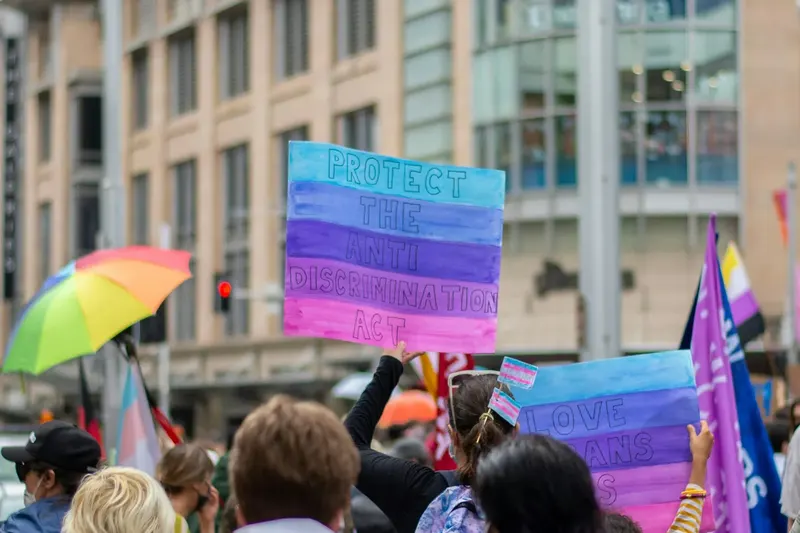
Federal law has prohibited discrimination on the grounds of sexual orientation, gender identity and intersex status since 1 August 2013. This explainer sets out how that protection applies when a business owner seeks finance or insurance, deals with customers and contracting organisations, and employs staff, and identifies where the protection is limited or uncertain.
ProcurementA large company or government agency must set a small business up as a supplier before it can buy from it. This explainer sets out what onboarding usually requires, where to register for government work, how payment terms are enforced, and how questions of identity arise in the process.
ProcurementSince 2018, Victorian Government buyers have been expected to use their purchasing to create social and environmental value, which affects how tenders are written and scored. This explainer sets out what the Social Procurement Framework asks of buyers and finds that LGBTIQA+ ownership is not one of its categories, although LGBTIQA+ owned businesses can still benefit from it in other ways.
The board has not yet been appointed. Expressions of interest are now open, and the people appointed will co design The State of LGBTQ+ Business in Australia with us: its method, the interviews and how the findings are presented. The board will also advise Just Gold on how to increase its impact in LGBTIQA+ communities.
At least three seats are reserved for members based in Victoria. The board is funded through the Victorian Government’s LGBTIQA+ Organisational Development program. The research is national and funded by Just Gold, and expressions of interest are welcome from across Australia. Five to eight members, meeting quarterly for about two hours, on twelve month terms. Expressions of interest close on 6 December 2026.
Read the position description
Business networks, supplier diversity, funders, community organisations, festivals and data, sorted by where you are.
Australia’s first certified social enterprise management consultancy and creative agency, Autistic and LGBTIQA+ owned and led. Pride in Business is part of its impact program. Just Gold funds and publishes the work, with no subscriptions to purchase and no paid placements. It builds on Just Gold’s earlier LGBTIQA+ work, from Think Pride to the 2019 Pride Program. Where this work comes from.
A registered charity, separate from Just Gold, that supports equity work commercial models do not fund. It is the research review partner and will provide expert review and intersectional analysis once the research begins.
